
Why the Africa SDGs Week is a model worth scaling
In October 2024, across 15 African countries, thousands of young people proved something development actors have long known, but too rarely act on.
This video presents the key highlights and outcomes of the event as outlined below.
When youth are trusted with resources, platforms, and leadership, they deliver impact, faster locally, and at scale.
The Africa SDGs Week, implemented by the African Institute for Mathematical Sciences (AIMS) in partnership with the William and Flora Hewlett Foundation, demonstrated what is possible when strategic funding meets youth-led action, applied within specific contexts.
What was designed and implemented as a pilot initiative, became a continent-wide catalyst for SDG awareness, innovation, and community-driven solutions, reaching far beyond conference rooms and into classrooms, villages, and underserved communities.
A high-impact delivered with modest investment
With modest, well-coordinated sub-grants and technical support, 15 Next Einstein Forum (NEF) Ambassadors, scientists, engineers, data experts, and innovators, turned their passion and leadership into concrete actions to lead the implementation of locally relevant SDG engagement programs across Africa. Recently rebranded as the Future of Science Forum (FSF), NEF is a public engagement initiative of AIMS that fosters connections between science, society, and policy in Africa and beyond, leveraging scientific excellence for global development.
The results were measurable and immediate.
- Over 6,300 in-person participants, 60% of them youth.
- About 52% women participation, with women leading most national activities.
- Over 100,000 people reached indirectly through radio, television, and digital media across different African countries and communities.
- Engagement across urban, rural, and nomadic communities, many encountering the SDGs for the first time.
This initiative transcended mere awareness raising, ensuring that participants emerged with defined action plans, critical skills, and the necessary momentum to succeed.
From funding to tangible outcomes
Donor investment translated directly into results on the ground as outlined below.
- In Guinea, youth co-developed an IoT-based solution to remove waste from waterways.
- In Rwanda and South Africa, young data scientists applied mathematical modeling to climate change and gender equality challenges.
- In Chad and Ghana, youth innovators pitched scalable solutions in health, education, agriculture, and Fintech, some referred to national programs and mentors.
- In Somaliland and Eswatini, target outreach events reached rural schools and nomadic communities traditionally excluded from national development discourse.
Across countries, civic organizations committed to integrating the SDGs into their training programs, expressing interest in partnership opportunities to extend the life of the investment beyond the event itself.
Why youth-led models work
A core lesson from the Africa SDGs Week is that youth do not need to be convinced to care. They need to be enabled and provided the space to express their passion in driving development agenda within their communities.
Given leadership roles, modest funding, and mentorship and reflecting on the SDG profiles of their respective countries:
- Youth volunteered to organize and sustain activities.
- Women formed mentorship and advocacy networks in STEM.
- Schools, universities, NGOs, and local authorities aligned around shared SDG priorities.
In several communities, women, particularly those from displaced communities, used the platform to advocate urgently for girls’ education, signaling a profound shift from passive participation to active leadership.
Visibility that multiplies impact
Leveraging the AIMS network communication channels, strategic messaging amplified the return on investment. Through coordinated media engagement, with focus on local languages:
- Youth voices reached global audiences via Radio France Internationale (RFI)
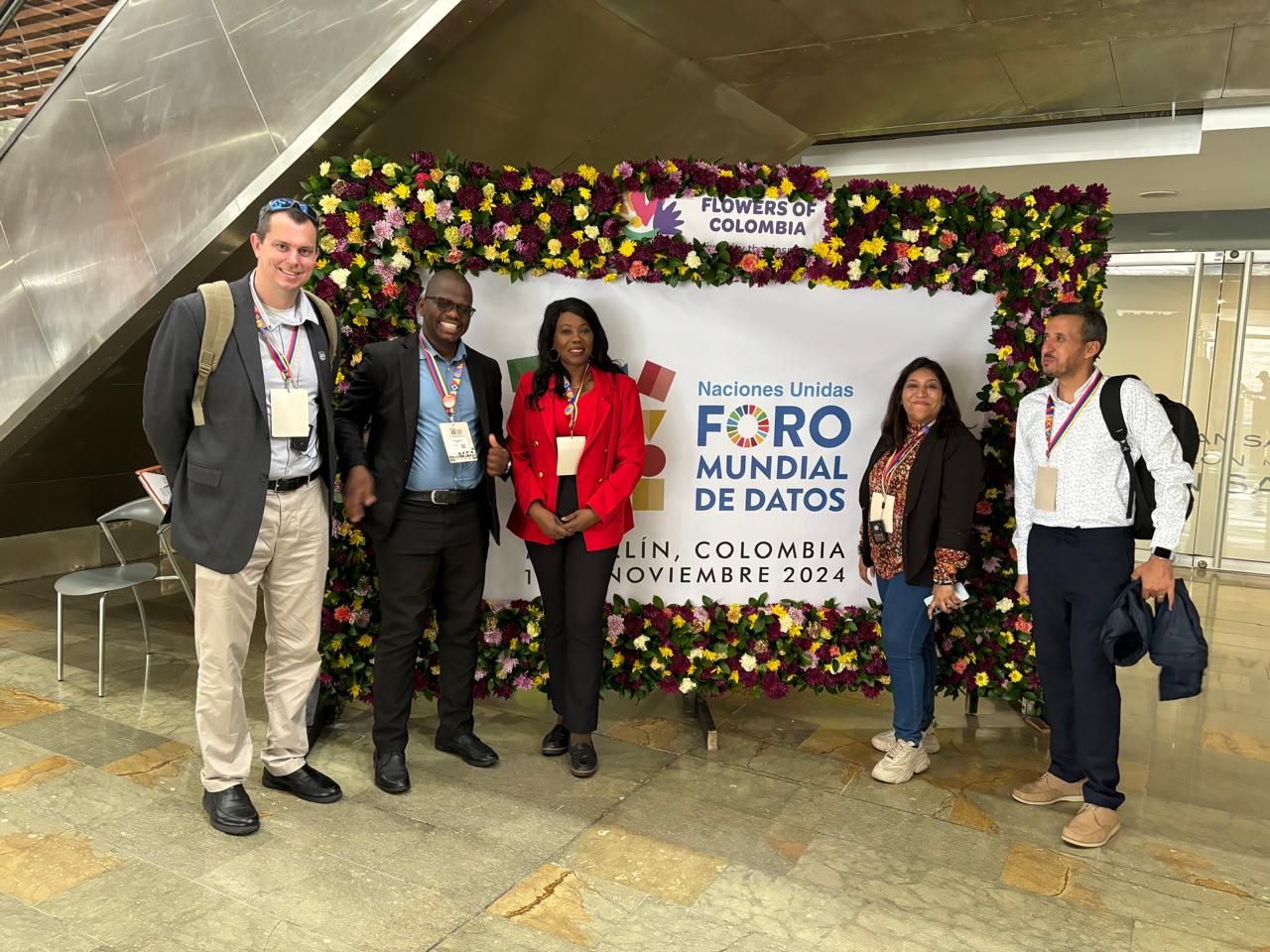
- Program outcomes were showcased at the UN World Data Forum 2024 in Medellin, Colombia and Science Forum South Africa 2024 in Pretoria, South Africa.
- National broadcasters ensured outreach extended beyond capitals into rural regions.
This visibility positioned young African scientists not as recipients of aid, but as credible contributors to global SDG solutions.
A scalable opportunity at a critical moment
With less than six years remaining to achieve Agenda 2030, the need for inclusive, youth-centered SDG action has never been greater, particularly in the Global South regions such as Africa.
The NEF Africa SDGs Week surfaced clear demand:
- Dozens of follow-up requests from youth and institutions to reach specific communities.
- Interest from partners seeking to replicate or expand country activities.
- A strong pipeline of youth-led innovations needing incubation and scale support.
What is missing is not ideas or leadership, but sustained investment on identified shared visions.
The case for continued support
Future editions can deliver even greater impact by:
- Expanding to more countries and deeper rural engagement.
- Providing seed funding and incubation for promising youth-led projects with viable innovations.
- Strengthening monitoring, evaluation, and learning systems.
- Formalizing mentorship and partnership networks across borders.
This is a high-leverage opportunity for funders seeking:
- Measurable SDG impact.
- Strong gender and youth outcomes.
- Scalable, locally owned development models.
- Credible African leadership at the center of global agendas.
Join us in scaling what works
The Africa SDGs Week has proven that strategic investment in youth delivers outsized returns, for communities, for countries, and for the SDG ecosystems.
As Africa’s young scientists and innovators step forward to shape the post-2030 agenda, the question is no longer whether they should lead, but whether we are willing to invest at the scale their potential demands.
This implementation of the first edition of the Africa SDGs Week was made possible through the generous support of the William and Flora Hewlett Foundation, a nonpartisan U.S.-based philanthropic organization. The Foundation provides reliable, responsive, and strategic support to partners such as AIMS, underscoring a shared vision of building an inclusive society where all people, communities, and the planet can thrive.
Partners, donors, and collaborators are invited to join the next phase. Together, we can move from pilot success to continental transformation.
All enquiries must be sent to industry.initiative@aims.ac.rw.
 English